Our Three Step Process
February 23, 2026
Why Your Shopify Store Gets Traffic but Not Sales
Our Three Step Process
February 23, 2026
Why Your Shopify Store Gets Traffic but Not Sales
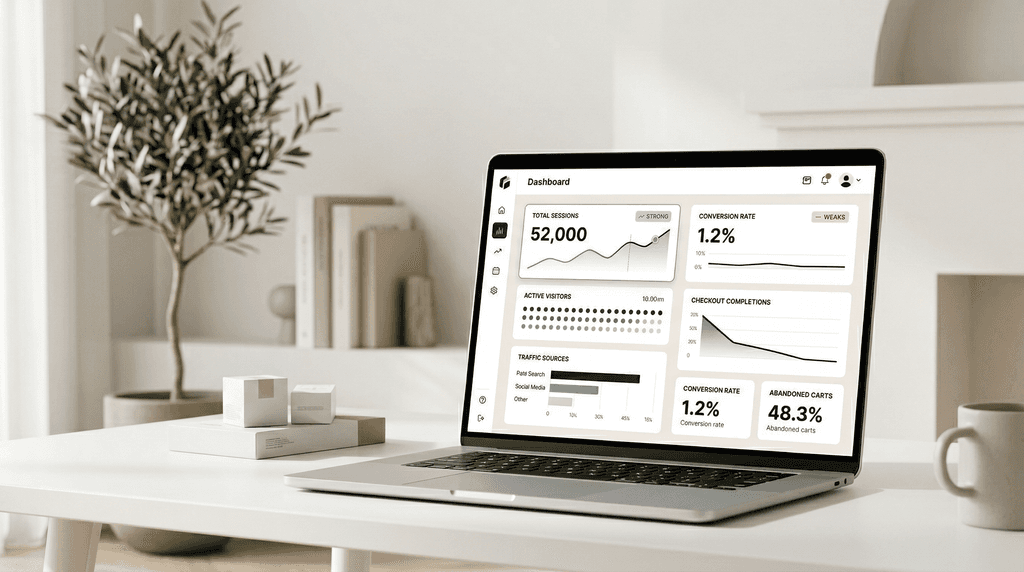
If your Shopify store is getting visitors but not enough sales, the issue is usually not traffic alone. In most cases, the real problem is conversion friction: weak product clarity, low trust, poor mobile experience, checkout friction, or traffic that is not as purchase-ready as it looks. Traffic shows interest, but conversion shows whether your store is actually helping shoppers buy.
Why this problem happens
A lot of D2C brands assume traffic is the hard part and sales should naturally follow. But getting someone to visit your store and getting them to buy are two very different things. Shopify explains that if a store gets traffic but sales stay soft, conversion rate is one of the clearest indicators that something in the buying journey is creating friction. That friction can come from unclear shipping costs, confusing checkout, weak mobile UX, poor value communication, or missing trust signals.
Another common issue is traffic quality. Not all traffic has the same intent. A store that gets visitors from paid ads, broad SEO content, or top-of-funnel campaigns will usually convert lower than one attracting returning customers or people already looking for a specific product. That means “a lot of traffic” can still be low-buying-intent traffic.
This is also where many D2C brands underestimate the role of the store itself. Your own Flaxen positioning already gets this right: ads bring people in, but the website determines whether they trust the brand, understand the offer, and move toward purchase. If the site fails to answer basic buying questions fast, traffic leaks out without revenue. Flaxen Media
How to fix it
1. Make the offer instantly clear
A first-time visitor should understand three things within a few seconds: what the product is, who it is for, and why it is worth buying from you instead of someone else. Shopify emphasizes the importance of a clear value proposition because if a visitor cannot immediately understand the offer, even a well-designed store will struggle to convert.
This is especially important for newer D2C brands. If the homepage or product page looks polished but still leaves shoppers wondering what makes the product different, sales will stay weak. Clear headlines, clear benefits, and clear product positioning matter more than clever copy.
2. Reduce friction on product pages
A lot of stores lose sales before checkout even begins. If shoppers land on a product page and still feel uncertain, they won’t click Add to Cart. Shopify’s CRO guidance recommends improving product pages through stronger visuals, better usability, and user testing to identify where customers hesitate.
Your own VulgrCo case study is a good example of this. The original Amazon experience was too static and too limited for a product that needed customization and explanation. Once the store experience was rebuilt around how customers actually buy — including clearer options, materials, pricing logic, and upload flow — the experience became far more conversion-friendly. Flaxen Media
3. Build trust before the shopper asks for it
Traffic does not convert when the shopper feels uncertain. Shopify highlights buyer anxiety as a major cause of lower conversion, especially for newer brands that have not yet earned familiarity. Reviews, testimonials, clear returns, shipping transparency, and reassurance throughout the buying journey all help reduce hesitation.
This also matches your own service logic. On your Shopify service page, you already frame trust, objections, proof, and messaging as essential parts of conversion. That is the right thinking. A store needs to answer the shopper’s doubts before they leave to compare alternatives. Flaxen Media
4. Fix mobile experience before you blame the product
A lot of traffic that “doesn’t convert” is really mobile traffic running into hidden UX issues. Shopify points out that broken or awkward mobile interactions — like difficult tapping, poor navigation, slow loading, or frustrating forms — can quickly drive shoppers away. On mobile, even a small usability issue can kill intent.
Mobile also affects checkout. Shopify recommends simplifying forms, using address autocomplete, enabling mobile-friendly payment methods, and making key buttons easy to tap. If your traffic is mostly coming from Meta, Instagram, or TikTok, mobile issues are often one of the first places to look.
5. Audit checkout and hidden costs
Some stores do a decent job until checkout, then lose the sale right before the finish line. Shopify notes that checkout friction remains one of the biggest reasons stores underperform, and cart abandonment is heavily influenced by complexity, surprises, and unnecessary effort.
Common problems include unexpected shipping fees, forced account creation, limited payment methods, slow page loads, and too many form fields. If traffic is healthy but revenue is weak, checkout is one of the first systems you should audit.
Common mistakes to avoid
One mistake is blaming traffic volume when the real issue is conversion quality. More visitors do not fix a weak store experience.
Another mistake is looking only at one blended conversion number. Shopify recommends thinking in segments: mobile vs desktop, paid vs organic, new vs returning users. Sometimes the store is not “bad at converting” overall — it is bad at converting one important traffic segment.
A third mistake is redesigning too early. Many brands assume the whole site needs a visual overhaul when the actual issue is much more specific: product-page clarity, weak trust signals, hidden shipping costs, or poor mobile checkout. Often the answer is optimization, not a full rebuild.
Quick checklist
Use this when your Shopify store is getting traffic but not enough sales:
Is your value proposition clear above the fold?
Do product pages explain benefits, proof, and objections clearly?
Are reviews or testimonials visible?
Are shipping, returns, and delivery details easy to find?
Does the store load quickly on mobile?
Are Add to Cart buttons easy to use on mobile?
Is checkout short and friction-light?
Do you offer trusted payment methods?
Are you attracting traffic with buying intent, not just curiosity?
Have you reviewed behavior with heatmaps or session recordings?
FAQs
Why is my Shopify store getting visitors but no orders?
Usually because something in the store is blocking confidence or creating friction. Common causes include weak product clarity, low trust, slow mobile experience, poor checkout, or low-intent traffic.
Can paid traffic still fail even if ads are working?
Yes. Ads can drive attention, but the store still has to convert that attention into action. If the landing page experience is weak, traffic will not turn into sales. Flaxen Media
What is the first thing I should audit?
Start with product pages, trust signals, and checkout. Those are usually the fastest places to find high-impact friction.
Does mobile really matter that much?
Yes. Shopify’s mobile UX guidance makes it clear that poor mobile navigation, tapping issues, slow load time, and form friction can directly cost sales.
How do I know whether the issue is traffic quality or store conversion?
Look at segmented data. Compare paid vs organic, new vs returning, and mobile vs desktop. If one segment performs much worse than others, that tells you where to investigate first.
Closing takeaway
If your Shopify store gets traffic but not enough sales, don’t assume the answer is simply “more traffic.” In most cases, the better answer is a sharper store experience: clearer offer, stronger trust, smoother product pages, better mobile UX, and less friction at checkout. For D2C brands, the store is where marketing either compounds or leaks. Shopify Flaxen Media
If your Shopify store is getting visitors but not enough sales, the issue is usually not traffic alone. In most cases, the real problem is conversion friction: weak product clarity, low trust, poor mobile experience, checkout friction, or traffic that is not as purchase-ready as it looks. Traffic shows interest, but conversion shows whether your store is actually helping shoppers buy.
Why this problem happens
A lot of D2C brands assume traffic is the hard part and sales should naturally follow. But getting someone to visit your store and getting them to buy are two very different things. Shopify explains that if a store gets traffic but sales stay soft, conversion rate is one of the clearest indicators that something in the buying journey is creating friction. That friction can come from unclear shipping costs, confusing checkout, weak mobile UX, poor value communication, or missing trust signals.
Another common issue is traffic quality. Not all traffic has the same intent. A store that gets visitors from paid ads, broad SEO content, or top-of-funnel campaigns will usually convert lower than one attracting returning customers or people already looking for a specific product. That means “a lot of traffic” can still be low-buying-intent traffic.
This is also where many D2C brands underestimate the role of the store itself. Your own Flaxen positioning already gets this right: ads bring people in, but the website determines whether they trust the brand, understand the offer, and move toward purchase. If the site fails to answer basic buying questions fast, traffic leaks out without revenue. Flaxen Media
How to fix it
1. Make the offer instantly clear
A first-time visitor should understand three things within a few seconds: what the product is, who it is for, and why it is worth buying from you instead of someone else. Shopify emphasizes the importance of a clear value proposition because if a visitor cannot immediately understand the offer, even a well-designed store will struggle to convert.
This is especially important for newer D2C brands. If the homepage or product page looks polished but still leaves shoppers wondering what makes the product different, sales will stay weak. Clear headlines, clear benefits, and clear product positioning matter more than clever copy.
2. Reduce friction on product pages
A lot of stores lose sales before checkout even begins. If shoppers land on a product page and still feel uncertain, they won’t click Add to Cart. Shopify’s CRO guidance recommends improving product pages through stronger visuals, better usability, and user testing to identify where customers hesitate.
Your own VulgrCo case study is a good example of this. The original Amazon experience was too static and too limited for a product that needed customization and explanation. Once the store experience was rebuilt around how customers actually buy — including clearer options, materials, pricing logic, and upload flow — the experience became far more conversion-friendly. Flaxen Media
3. Build trust before the shopper asks for it
Traffic does not convert when the shopper feels uncertain. Shopify highlights buyer anxiety as a major cause of lower conversion, especially for newer brands that have not yet earned familiarity. Reviews, testimonials, clear returns, shipping transparency, and reassurance throughout the buying journey all help reduce hesitation.
This also matches your own service logic. On your Shopify service page, you already frame trust, objections, proof, and messaging as essential parts of conversion. That is the right thinking. A store needs to answer the shopper’s doubts before they leave to compare alternatives. Flaxen Media
4. Fix mobile experience before you blame the product
A lot of traffic that “doesn’t convert” is really mobile traffic running into hidden UX issues. Shopify points out that broken or awkward mobile interactions — like difficult tapping, poor navigation, slow loading, or frustrating forms — can quickly drive shoppers away. On mobile, even a small usability issue can kill intent.
Mobile also affects checkout. Shopify recommends simplifying forms, using address autocomplete, enabling mobile-friendly payment methods, and making key buttons easy to tap. If your traffic is mostly coming from Meta, Instagram, or TikTok, mobile issues are often one of the first places to look.
5. Audit checkout and hidden costs
Some stores do a decent job until checkout, then lose the sale right before the finish line. Shopify notes that checkout friction remains one of the biggest reasons stores underperform, and cart abandonment is heavily influenced by complexity, surprises, and unnecessary effort.
Common problems include unexpected shipping fees, forced account creation, limited payment methods, slow page loads, and too many form fields. If traffic is healthy but revenue is weak, checkout is one of the first systems you should audit.
Common mistakes to avoid
One mistake is blaming traffic volume when the real issue is conversion quality. More visitors do not fix a weak store experience.
Another mistake is looking only at one blended conversion number. Shopify recommends thinking in segments: mobile vs desktop, paid vs organic, new vs returning users. Sometimes the store is not “bad at converting” overall — it is bad at converting one important traffic segment.
A third mistake is redesigning too early. Many brands assume the whole site needs a visual overhaul when the actual issue is much more specific: product-page clarity, weak trust signals, hidden shipping costs, or poor mobile checkout. Often the answer is optimization, not a full rebuild.
Quick checklist
Use this when your Shopify store is getting traffic but not enough sales:
Is your value proposition clear above the fold?
Do product pages explain benefits, proof, and objections clearly?
Are reviews or testimonials visible?
Are shipping, returns, and delivery details easy to find?
Does the store load quickly on mobile?
Are Add to Cart buttons easy to use on mobile?
Is checkout short and friction-light?
Do you offer trusted payment methods?
Are you attracting traffic with buying intent, not just curiosity?
Have you reviewed behavior with heatmaps or session recordings?
FAQs
Why is my Shopify store getting visitors but no orders?
Usually because something in the store is blocking confidence or creating friction. Common causes include weak product clarity, low trust, slow mobile experience, poor checkout, or low-intent traffic.
Can paid traffic still fail even if ads are working?
Yes. Ads can drive attention, but the store still has to convert that attention into action. If the landing page experience is weak, traffic will not turn into sales. Flaxen Media
What is the first thing I should audit?
Start with product pages, trust signals, and checkout. Those are usually the fastest places to find high-impact friction.
Does mobile really matter that much?
Yes. Shopify’s mobile UX guidance makes it clear that poor mobile navigation, tapping issues, slow load time, and form friction can directly cost sales.
How do I know whether the issue is traffic quality or store conversion?
Look at segmented data. Compare paid vs organic, new vs returning, and mobile vs desktop. If one segment performs much worse than others, that tells you where to investigate first.
Closing takeaway
If your Shopify store gets traffic but not enough sales, don’t assume the answer is simply “more traffic.” In most cases, the better answer is a sharper store experience: clearer offer, stronger trust, smoother product pages, better mobile UX, and less friction at checkout. For D2C brands, the store is where marketing either compounds or leaks. Shopify Flaxen Media
Other Blogs
Other Blogs
Check our other project Blogs with useful insight and information for your businesses

Other Blogs
Other Blogs
Check our other project Blogs with useful insight and information for your businesses