Our Three Step Process
September 4, 2026
Why D2C brands lose repeat revenue when their subscription flow breaks
Our Three Step Process
September 4, 2026
Why D2C brands lose repeat revenue when their subscription flow breaks
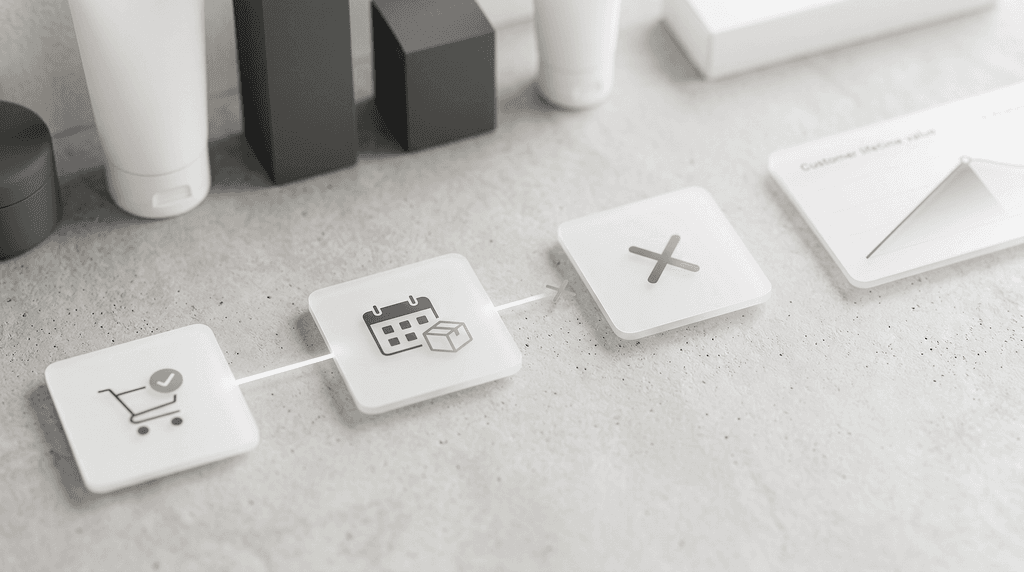
D2C brands lose repeat revenue when the subscription experience breaks in ways that are easy to miss: failed payments, weak dunning, poor customer controls, confusing billing, and unreliable autoship flows. In many cases, the customer does not actively choose to leave — the system simply fails to keep them. Shopify’s retention guidance specifically highlights involuntary churn and recommends dunning management, payment retries, and better subscription infrastructure to protect recurring revenue.
Why this happens
A lot of brands think retention drops because customers “lost interest.” But for subscription-driven D2C brands, a meaningful chunk of lost revenue comes from operational issues rather than product-market fit. Shopify’s retention content points out that involuntary churn happens when cards fail, expire, or do not process correctly — even when the customer never intended to cancel. One brand cited by Shopify was losing around 13% of monthly subscribers and 28% of yearly subscribers through payment-related churn alone.
This gets worse when the subscription flow is treated like a plugin instead of a revenue system. If billing is unreliable, customer controls are poor, or the store experience does not support easy management of subscriptions, repeat revenue quietly erodes. That is especially dangerous for consumable D2C brands, where the business model depends on recurring purchase behavior.
How to fix it
1. Treat involuntary churn as a real revenue problem
If a payment fails, that is not a small backend issue — it is lost revenue. Shopify recommends using dunning management to reduce subscription churn caused by failed cards and billing issues. Basic retention emails alone usually do not fix this, because the problem is transactional, not emotional.
2. Add retry logic and card-update workflows
Shopify’s retention example highlights that retrying failed payments over the following weeks can recover a meaningful share of lost revenue. If the system is not automatically retrying payments and prompting customers to update card details, you are likely losing subscribers you could have kept.
3. Make customer subscription controls easy
Subscribers are more likely to stay when they can clearly pause, skip, edit, or manage their plan without friction. A rigid or confusing subscription experience creates unnecessary cancellations, support tickets, and distrust. For D2C brands, the best subscription setup should feel simple and dependable, not fragile.
4. Support subscriptions with a better storefront experience
Subscriptions do not live in isolation. Product pages, trust signals, inventory reliability, and checkout clarity all affect whether a buyer starts and keeps a subscription. If the rest of the store feels broken, the subscription offer will not perform as well either.
5. Build retention around the full lifecycle
Shopify emphasizes retention systems like personalization, loyalty, proactive support, and shared customer data. Subscription brands should not rely only on recurring billing — they should also support the relationship through email, SMS, helpful post-purchase flows, and clearer retention touchpoints.
Real example
A strong example is Black Gold Elixir. The brand already had traffic and a solid product, but the Shopify store was holding growth back. One of the biggest issues was the subscription flow: for a daily-use wellness product, subscriptions were central to repeat revenue, yet the autoship experience was unreliable. Once the store was repaired and the subscription system was rebuilt with cleaner billing and better customer experience, the business could finally convert existing demand into more stable recurring revenue.
Common mistakes to avoid
One common mistake is treating subscription churn as a pure marketing problem. Another is assuming a customer canceled on purpose when the payment actually failed. Brands also often underestimate how much broken product pages, stock issues, or checkout friction can weaken subscription performance. And many teams launch subscriptions without proper dunning, customer self-management, or ongoing lifecycle support.
Quick checklist
Are failed subscription payments being retried automatically?
Do customers get prompts to update expired cards?
Can subscribers easily pause, skip, or edit orders?
Is the subscription flow reliable on mobile and desktop?
Are product pages clear enough to support repeat-purchase intent?
Is inventory accurate enough to avoid fulfillment problems?
Are support and lifecycle flows helping keep customers active?
FAQs
Is subscription churn always a product problem?
No. Shopify’s retention guidance shows that a meaningful portion of churn is involuntary — customers are lost because payments fail, not because they intentionally cancel.
What is dunning?
Dunning is the process of recovering failed subscription payments through retries, reminders, and card-update prompts so customers are not lost unnecessarily.
Can a broken subscription flow really cap growth?
Yes. For replenishable D2C brands, subscriptions often represent the highest-value repeat revenue path. If that system is weak, growth gets capped even when traffic is already there.
Closing takeaway
If your D2C brand depends on repeat purchase, the subscription flow is not a side feature — it is part of the business model. When it breaks, revenue leaks quietly through failed billing, weak retention systems, and avoidable churn. Fixing the flow often unlocks growth faster than chasing more traffic.
If your brand relies on subscriptions but repeat revenue feels inconsistent, Flaxen can help audit the store, repair the subscription flow, and remove the operational friction that quietly drives churn.
D2C brands lose repeat revenue when the subscription experience breaks in ways that are easy to miss: failed payments, weak dunning, poor customer controls, confusing billing, and unreliable autoship flows. In many cases, the customer does not actively choose to leave — the system simply fails to keep them. Shopify’s retention guidance specifically highlights involuntary churn and recommends dunning management, payment retries, and better subscription infrastructure to protect recurring revenue.
Why this happens
A lot of brands think retention drops because customers “lost interest.” But for subscription-driven D2C brands, a meaningful chunk of lost revenue comes from operational issues rather than product-market fit. Shopify’s retention content points out that involuntary churn happens when cards fail, expire, or do not process correctly — even when the customer never intended to cancel. One brand cited by Shopify was losing around 13% of monthly subscribers and 28% of yearly subscribers through payment-related churn alone.
This gets worse when the subscription flow is treated like a plugin instead of a revenue system. If billing is unreliable, customer controls are poor, or the store experience does not support easy management of subscriptions, repeat revenue quietly erodes. That is especially dangerous for consumable D2C brands, where the business model depends on recurring purchase behavior.
How to fix it
1. Treat involuntary churn as a real revenue problem
If a payment fails, that is not a small backend issue — it is lost revenue. Shopify recommends using dunning management to reduce subscription churn caused by failed cards and billing issues. Basic retention emails alone usually do not fix this, because the problem is transactional, not emotional.
2. Add retry logic and card-update workflows
Shopify’s retention example highlights that retrying failed payments over the following weeks can recover a meaningful share of lost revenue. If the system is not automatically retrying payments and prompting customers to update card details, you are likely losing subscribers you could have kept.
3. Make customer subscription controls easy
Subscribers are more likely to stay when they can clearly pause, skip, edit, or manage their plan without friction. A rigid or confusing subscription experience creates unnecessary cancellations, support tickets, and distrust. For D2C brands, the best subscription setup should feel simple and dependable, not fragile.
4. Support subscriptions with a better storefront experience
Subscriptions do not live in isolation. Product pages, trust signals, inventory reliability, and checkout clarity all affect whether a buyer starts and keeps a subscription. If the rest of the store feels broken, the subscription offer will not perform as well either.
5. Build retention around the full lifecycle
Shopify emphasizes retention systems like personalization, loyalty, proactive support, and shared customer data. Subscription brands should not rely only on recurring billing — they should also support the relationship through email, SMS, helpful post-purchase flows, and clearer retention touchpoints.
Real example
A strong example is Black Gold Elixir. The brand already had traffic and a solid product, but the Shopify store was holding growth back. One of the biggest issues was the subscription flow: for a daily-use wellness product, subscriptions were central to repeat revenue, yet the autoship experience was unreliable. Once the store was repaired and the subscription system was rebuilt with cleaner billing and better customer experience, the business could finally convert existing demand into more stable recurring revenue.
Common mistakes to avoid
One common mistake is treating subscription churn as a pure marketing problem. Another is assuming a customer canceled on purpose when the payment actually failed. Brands also often underestimate how much broken product pages, stock issues, or checkout friction can weaken subscription performance. And many teams launch subscriptions without proper dunning, customer self-management, or ongoing lifecycle support.
Quick checklist
Are failed subscription payments being retried automatically?
Do customers get prompts to update expired cards?
Can subscribers easily pause, skip, or edit orders?
Is the subscription flow reliable on mobile and desktop?
Are product pages clear enough to support repeat-purchase intent?
Is inventory accurate enough to avoid fulfillment problems?
Are support and lifecycle flows helping keep customers active?
FAQs
Is subscription churn always a product problem?
No. Shopify’s retention guidance shows that a meaningful portion of churn is involuntary — customers are lost because payments fail, not because they intentionally cancel.
What is dunning?
Dunning is the process of recovering failed subscription payments through retries, reminders, and card-update prompts so customers are not lost unnecessarily.
Can a broken subscription flow really cap growth?
Yes. For replenishable D2C brands, subscriptions often represent the highest-value repeat revenue path. If that system is weak, growth gets capped even when traffic is already there.
Closing takeaway
If your D2C brand depends on repeat purchase, the subscription flow is not a side feature — it is part of the business model. When it breaks, revenue leaks quietly through failed billing, weak retention systems, and avoidable churn. Fixing the flow often unlocks growth faster than chasing more traffic.
If your brand relies on subscriptions but repeat revenue feels inconsistent, Flaxen can help audit the store, repair the subscription flow, and remove the operational friction that quietly drives churn.
Other Blogs
Other Blogs
Check our other project Blogs with useful insight and information for your businesses

Other Blogs
Other Blogs
Check our other project Blogs with useful insight and information for your businesses