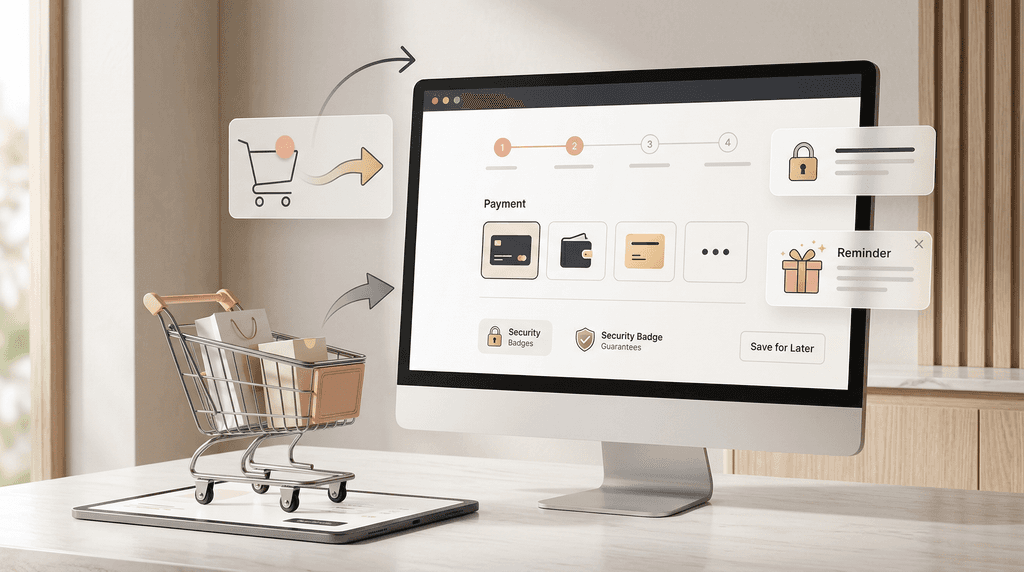
Our Three Step Process
December 3, 2026
How to reduce cart abandonment on Shopify for D2C brands
Our Three Step Process
December 3, 2026
How to reduce cart abandonment on Shopify for D2C brands
D2C brands reduce cart abandonment on Shopify by lowering checkout friction, improving trust, clarifying costs earlier, offering better payment flexibility, and using recovery flows that bring high-intent shoppers back. Shopify notes that cart abandonment remains a major profitability issue for ecommerce brands, with rates as high as 70%, and highlights tactics like Buy Now, Pay Later, better checkout experience, and recovery campaigns to improve conversion.
Why this happens
Cart abandonment is rarely caused by one thing. More often, it is the result of friction stacking up: surprise costs, weak trust signals, confusing checkout, poor mobile experience, or hesitation around payment. D2C brands feel this more sharply because they are paying to acquire the traffic in the first place, so every abandoned cart becomes wasted acquisition spend. Shopify’s DTC marketing guidance makes this clear: reducing abandonment is directly tied to improving profitability.
For many brands, the real issue is that the store is good enough to attract interest but not strong enough to close the sale. That is why cart abandonment should be treated as a store-experience problem, not only an email automation problem.
How to fix it
1. Remove surprise costs early
If shipping, taxes, or fees appear too late, shoppers pause. And once they pause, many never come back. Clear shipping thresholds, returns information, and pricing clarity should show up before checkout friction starts.
2. Offer payment flexibility
Shopify specifically notes that Buy Now, Pay Later can help reduce cart abandonment for ecommerce brands. For higher-consideration purchases, payment flexibility can be the difference between hesitation and conversion.
3. Improve trust where the decision happens
Reviews, delivery expectations, returns, guarantees, and product reassurance should not be buried. Merchant discussions on Shopify Community repeatedly point to social proof, payment trust, policies, and brand clarity as major gaps when traffic converts poorly.
4. Fix the mobile and checkout experience
A shopper who adds to cart is already interested. At that point, even small friction matters: slow loading, weak CTA visibility, unnecessary steps, or checkout confusion. Shopify’s conversion guidance emphasizes simplifying checkout and reducing unnecessary barriers.
5. Recover the carts that should have converted
Some abandonment will still happen, so recovery matters. Shopify recommends abandonment campaigns and recovery flows as part of a stronger D2C system. Retargeting, cart emails, SMS reminders, and intent-based follow-up can bring back people who were close to buying.
Real example
A useful case here is Black Gold Elixir. The brand already had traffic, but the store experience was quietly leaking revenue through broken pages, unreliable subscriptions, collection issues, and checkout-related friction. Once the storefront and backend were repaired, the existing audience finally had a clearer path to buy. That is the lesson for D2C brands: abandonment often reflects store friction more than lack of demand.
Common mistakes to avoid
A common mistake is focusing only on abandonment emails while ignoring the actual cause of abandonment. Another is assuming the cart problem starts at checkout, when in reality it may start on the product page with weak trust, poor merchandising, or unclear value. Brands also often forget that mobile friction, slow pages, and payment hesitation can quietly hurt conversion before a shopper ever completes checkout.
Quick checklist
Are shipping and returns clear before checkout?
Do product pages feel trustworthy enough to support purchase?
Are payment options flexible enough for your category?
Is mobile checkout smooth and fast?
Are there unnecessary steps in checkout?
Are abandonment emails or reminders active?
Are you reviewing where users drop off most often?
FAQs
What is a normal cart abandonment rate?
Shopify’s DTC marketing content notes that cart abandonment rates can be as high as 70%, which is why recovery and checkout optimization matter so much.
Does BNPL actually help reduce abandonment?
It can. Shopify specifically points to BNPL as one way ecommerce brands can reduce abandonment and improve profitability.
Are cart emails enough?
No. Recovery emails help, but they work best when the store itself is already reducing friction before the shopper leaves.
Closing takeaway
For D2C brands, cart abandonment is not just a conversion metric — it is a margin problem. If you are paying to attract visitors and they keep stalling before purchase, the issue is usually friction, trust, or payment experience. Fix those first, then let recovery flows do the rest.
If your store is getting add-to-carts but not enough completed orders, Flaxen can help identify where buyers are hesitating and tighten the path from product page to checkout.
D2C brands reduce cart abandonment on Shopify by lowering checkout friction, improving trust, clarifying costs earlier, offering better payment flexibility, and using recovery flows that bring high-intent shoppers back. Shopify notes that cart abandonment remains a major profitability issue for ecommerce brands, with rates as high as 70%, and highlights tactics like Buy Now, Pay Later, better checkout experience, and recovery campaigns to improve conversion.
Why this happens
Cart abandonment is rarely caused by one thing. More often, it is the result of friction stacking up: surprise costs, weak trust signals, confusing checkout, poor mobile experience, or hesitation around payment. D2C brands feel this more sharply because they are paying to acquire the traffic in the first place, so every abandoned cart becomes wasted acquisition spend. Shopify’s DTC marketing guidance makes this clear: reducing abandonment is directly tied to improving profitability.
For many brands, the real issue is that the store is good enough to attract interest but not strong enough to close the sale. That is why cart abandonment should be treated as a store-experience problem, not only an email automation problem.
How to fix it
1. Remove surprise costs early
If shipping, taxes, or fees appear too late, shoppers pause. And once they pause, many never come back. Clear shipping thresholds, returns information, and pricing clarity should show up before checkout friction starts.
2. Offer payment flexibility
Shopify specifically notes that Buy Now, Pay Later can help reduce cart abandonment for ecommerce brands. For higher-consideration purchases, payment flexibility can be the difference between hesitation and conversion.
3. Improve trust where the decision happens
Reviews, delivery expectations, returns, guarantees, and product reassurance should not be buried. Merchant discussions on Shopify Community repeatedly point to social proof, payment trust, policies, and brand clarity as major gaps when traffic converts poorly.
4. Fix the mobile and checkout experience
A shopper who adds to cart is already interested. At that point, even small friction matters: slow loading, weak CTA visibility, unnecessary steps, or checkout confusion. Shopify’s conversion guidance emphasizes simplifying checkout and reducing unnecessary barriers.
5. Recover the carts that should have converted
Some abandonment will still happen, so recovery matters. Shopify recommends abandonment campaigns and recovery flows as part of a stronger D2C system. Retargeting, cart emails, SMS reminders, and intent-based follow-up can bring back people who were close to buying.
Real example
A useful case here is Black Gold Elixir. The brand already had traffic, but the store experience was quietly leaking revenue through broken pages, unreliable subscriptions, collection issues, and checkout-related friction. Once the storefront and backend were repaired, the existing audience finally had a clearer path to buy. That is the lesson for D2C brands: abandonment often reflects store friction more than lack of demand.
Common mistakes to avoid
A common mistake is focusing only on abandonment emails while ignoring the actual cause of abandonment. Another is assuming the cart problem starts at checkout, when in reality it may start on the product page with weak trust, poor merchandising, or unclear value. Brands also often forget that mobile friction, slow pages, and payment hesitation can quietly hurt conversion before a shopper ever completes checkout.
Quick checklist
Are shipping and returns clear before checkout?
Do product pages feel trustworthy enough to support purchase?
Are payment options flexible enough for your category?
Is mobile checkout smooth and fast?
Are there unnecessary steps in checkout?
Are abandonment emails or reminders active?
Are you reviewing where users drop off most often?
FAQs
What is a normal cart abandonment rate?
Shopify’s DTC marketing content notes that cart abandonment rates can be as high as 70%, which is why recovery and checkout optimization matter so much.
Does BNPL actually help reduce abandonment?
It can. Shopify specifically points to BNPL as one way ecommerce brands can reduce abandonment and improve profitability.
Are cart emails enough?
No. Recovery emails help, but they work best when the store itself is already reducing friction before the shopper leaves.
Closing takeaway
For D2C brands, cart abandonment is not just a conversion metric — it is a margin problem. If you are paying to attract visitors and they keep stalling before purchase, the issue is usually friction, trust, or payment experience. Fix those first, then let recovery flows do the rest.
If your store is getting add-to-carts but not enough completed orders, Flaxen can help identify where buyers are hesitating and tighten the path from product page to checkout.
Other Blogs
Other Blogs
Check our other project Blogs with useful insight and information for your businesses


Other Blogs
Other Blogs
Check our other project Blogs with useful insight and information for your businesses