Our Three Step Process
January 8, 2026
How D2C brands can improve retention on Shopify
Our Three Step Process
January 8, 2026
How D2C brands can improve retention on Shopify
D2C brands improve retention on Shopify by using first-party data to understand customers better, segmenting buyers based on behavior, personalizing the storefront and retention messaging, building loyalty and subscription programs, and fixing the operational issues that quietly cause churn. Shopify’s retention guidance emphasizes centralized customer data, personalized experiences, loyalty programs, proactive support, and dunning management for subscription businesses.
Why this problem happens
A lot of D2C brands spend most of their energy on acquisition. They work hard to get traffic, improve ads, and increase first-time orders, but they don’t build the systems that bring customers back. That usually means customer data is fragmented, post-purchase follow-up is generic, subscriptions fail silently, and the store experience doesn’t adapt to repeat buyers. Shopify’s guidance is clear that retention improves when brands unify customer data, personalize experiences, and create stronger ongoing relationships after the first purchase.
Retention also matters more for D2C brands because owned channels are where the real compounding happens. Shopify notes that first-party data from channels you own—like your ecommerce store—helps brands segment customers and keep them in their D2C ecosystem through more relevant outreach. Shopify also highlights growth in returning shoppers, showing that loyalty is a real opportunity when the store and retention systems are built properly.
How to fix it
1. Start with customer segments, not blanket messaging
Not every customer should get the same email, offer, or onsite experience. Separate first-time buyers, repeat buyers, high-AOV customers, subscribers, churn-risk customers, and product-specific cohorts. Shopify recommends using shared customer data and segmentation as the base for more relevant retention efforts.
2. Personalize the shopping experience for returning customers
Retention is easier when the store remembers people. That can mean product recommendations based on past purchases, easy reordering, saved carts, wishlists, or messaging tailored to the customer’s purchase history. Shopify specifically recommends personalized product and content suggestions powered by unified customer data.
3. Build loyalty into the business, not just discounts
Loyalty should reward repeat behavior, not just cut margin. A strong program can include points, tiered benefits, early access, VIP offers, birthday rewards, or subscriber-only bundles. Shopify recommends designing loyalty programs that work across channels and help brands reward repeat purchasing behavior consistently.
4. Treat subscriptions like a retention engine
For consumables, replenishable products, or recurring-use items, subscriptions are often one of the clearest retention levers. But a broken subscription flow creates churn immediately. Shopify’s retention guidance specifically calls out dunning management tools to reduce involuntary churn from failed payments or expired cards.
5. Improve post-purchase support and trust
Retention is not just email. Customers stay when the experience feels easy and reliable. Shopify recommends proactive support, including self-service help during shopping and after purchase. Clear delivery expectations, reorder reminders, subscription controls, and easy support access all reduce frustration and help buyers come back.
Real example
A strong example from your own site is Black Gold Elixir. The brand already had traffic, but the Shopify store was leaking revenue because product pages, collections, inventory systems, and—most importantly—the subscription flow were broken. Once the store was repaired and the subscription experience was rebuilt, the site could finally convert traffic into repeat customers and subscribers more reliably. That’s a good retention lesson for D2C brands: sometimes retention isn’t a “marketing” problem at all—it’s an operational and storefront problem.
Common mistakes to avoid
One common mistake is treating retention as only an email problem. Another is sending the same offer to everyone instead of segmenting by behavior. Many brands also launch subscriptions without fixing failed-payment recovery, customer self-management, or the product-page clarity needed to get subscribers in the first place. And finally, brands often chase new traffic while their repeat-purchase experience is still weak. Shopify’s retention guidance shows that personalization, support, and dunning matter just as much as campaigns.
Quick checklist
Do you know who your best repeat customers actually are?
Are you segmenting first-time buyers vs repeat buyers?
Can returning customers reorder easily?
Do you have a loyalty or reward structure?
Is your subscription flow reliable?
Are failed payments being recovered automatically?
Are support, shipping, and returns easy to access?
Are post-purchase emails actually useful and timely?
Is your storefront personalized for returning customers?
Are you using owned customer data to improve repeat purchase?
FAQs
What is the best retention strategy for a D2C Shopify brand?
Usually a combination of segmentation, personalized lifecycle messaging, loyalty, subscriptions where relevant, and a smoother post-purchase experience. Shopify emphasizes that retention works best when built on unified customer data.
Are subscriptions always necessary?
No. But for replenishable or routine-use products, subscriptions can be a major retention lever—if the billing and customer experience work properly.
Does retention mostly happen through email?
Email matters, but retention also depends on the storefront, support experience, loyalty systems, and subscription management. Source
Closing takeaway
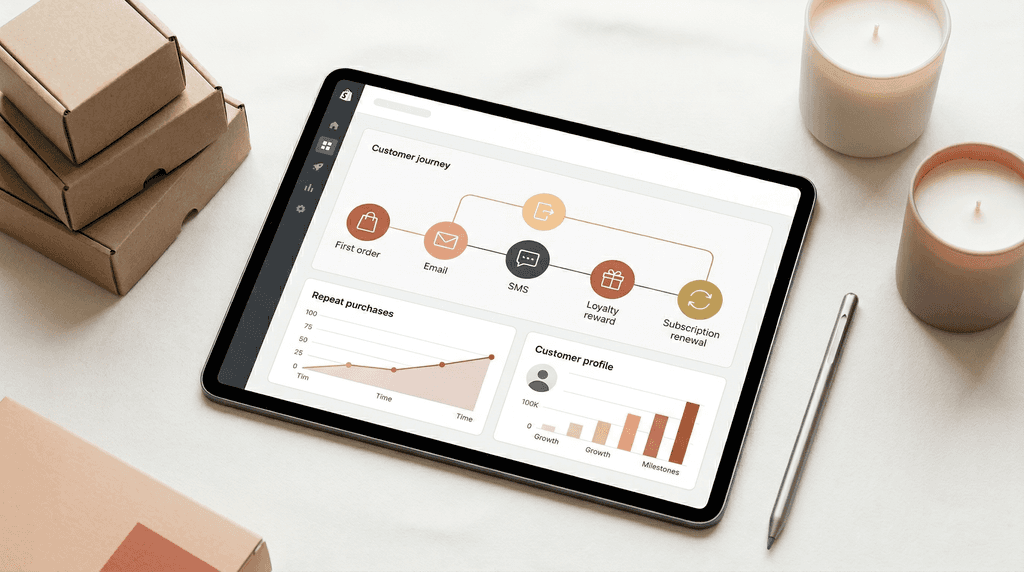
The best D2C brands don’t just acquire customers—they build systems that make customers want to come back. On Shopify, that usually means better segmentation, better post-purchase experience, stronger loyalty mechanics, and a store that actually supports repeat buying. If retention feels weak, don’t just look at campaigns. Look at the entire customer journey.
If your Shopify store is getting customers once but struggling to bring them back, Flaxen can help identify where retention is breaking—store experience, subscriptions, product structure, or lifecycle flow—and fix the leaks before you spend more on acquisition.
D2C brands improve retention on Shopify by using first-party data to understand customers better, segmenting buyers based on behavior, personalizing the storefront and retention messaging, building loyalty and subscription programs, and fixing the operational issues that quietly cause churn. Shopify’s retention guidance emphasizes centralized customer data, personalized experiences, loyalty programs, proactive support, and dunning management for subscription businesses.
Why this problem happens
A lot of D2C brands spend most of their energy on acquisition. They work hard to get traffic, improve ads, and increase first-time orders, but they don’t build the systems that bring customers back. That usually means customer data is fragmented, post-purchase follow-up is generic, subscriptions fail silently, and the store experience doesn’t adapt to repeat buyers. Shopify’s guidance is clear that retention improves when brands unify customer data, personalize experiences, and create stronger ongoing relationships after the first purchase.
Retention also matters more for D2C brands because owned channels are where the real compounding happens. Shopify notes that first-party data from channels you own—like your ecommerce store—helps brands segment customers and keep them in their D2C ecosystem through more relevant outreach. Shopify also highlights growth in returning shoppers, showing that loyalty is a real opportunity when the store and retention systems are built properly.
How to fix it
1. Start with customer segments, not blanket messaging
Not every customer should get the same email, offer, or onsite experience. Separate first-time buyers, repeat buyers, high-AOV customers, subscribers, churn-risk customers, and product-specific cohorts. Shopify recommends using shared customer data and segmentation as the base for more relevant retention efforts.
2. Personalize the shopping experience for returning customers
Retention is easier when the store remembers people. That can mean product recommendations based on past purchases, easy reordering, saved carts, wishlists, or messaging tailored to the customer’s purchase history. Shopify specifically recommends personalized product and content suggestions powered by unified customer data.
3. Build loyalty into the business, not just discounts
Loyalty should reward repeat behavior, not just cut margin. A strong program can include points, tiered benefits, early access, VIP offers, birthday rewards, or subscriber-only bundles. Shopify recommends designing loyalty programs that work across channels and help brands reward repeat purchasing behavior consistently.
4. Treat subscriptions like a retention engine
For consumables, replenishable products, or recurring-use items, subscriptions are often one of the clearest retention levers. But a broken subscription flow creates churn immediately. Shopify’s retention guidance specifically calls out dunning management tools to reduce involuntary churn from failed payments or expired cards.
5. Improve post-purchase support and trust
Retention is not just email. Customers stay when the experience feels easy and reliable. Shopify recommends proactive support, including self-service help during shopping and after purchase. Clear delivery expectations, reorder reminders, subscription controls, and easy support access all reduce frustration and help buyers come back.
Real example
A strong example from your own site is Black Gold Elixir. The brand already had traffic, but the Shopify store was leaking revenue because product pages, collections, inventory systems, and—most importantly—the subscription flow were broken. Once the store was repaired and the subscription experience was rebuilt, the site could finally convert traffic into repeat customers and subscribers more reliably. That’s a good retention lesson for D2C brands: sometimes retention isn’t a “marketing” problem at all—it’s an operational and storefront problem.
Common mistakes to avoid
One common mistake is treating retention as only an email problem. Another is sending the same offer to everyone instead of segmenting by behavior. Many brands also launch subscriptions without fixing failed-payment recovery, customer self-management, or the product-page clarity needed to get subscribers in the first place. And finally, brands often chase new traffic while their repeat-purchase experience is still weak. Shopify’s retention guidance shows that personalization, support, and dunning matter just as much as campaigns.
Quick checklist
Do you know who your best repeat customers actually are?
Are you segmenting first-time buyers vs repeat buyers?
Can returning customers reorder easily?
Do you have a loyalty or reward structure?
Is your subscription flow reliable?
Are failed payments being recovered automatically?
Are support, shipping, and returns easy to access?
Are post-purchase emails actually useful and timely?
Is your storefront personalized for returning customers?
Are you using owned customer data to improve repeat purchase?
FAQs
What is the best retention strategy for a D2C Shopify brand?
Usually a combination of segmentation, personalized lifecycle messaging, loyalty, subscriptions where relevant, and a smoother post-purchase experience. Shopify emphasizes that retention works best when built on unified customer data.
Are subscriptions always necessary?
No. But for replenishable or routine-use products, subscriptions can be a major retention lever—if the billing and customer experience work properly.
Does retention mostly happen through email?
Email matters, but retention also depends on the storefront, support experience, loyalty systems, and subscription management. Source
Closing takeaway
The best D2C brands don’t just acquire customers—they build systems that make customers want to come back. On Shopify, that usually means better segmentation, better post-purchase experience, stronger loyalty mechanics, and a store that actually supports repeat buying. If retention feels weak, don’t just look at campaigns. Look at the entire customer journey.
If your Shopify store is getting customers once but struggling to bring them back, Flaxen can help identify where retention is breaking—store experience, subscriptions, product structure, or lifecycle flow—and fix the leaks before you spend more on acquisition.
Other Blogs
Other Blogs
Check our other project Blogs with useful insight and information for your businesses


Other Blogs
Other Blogs
Check our other project Blogs with useful insight and information for your businesses